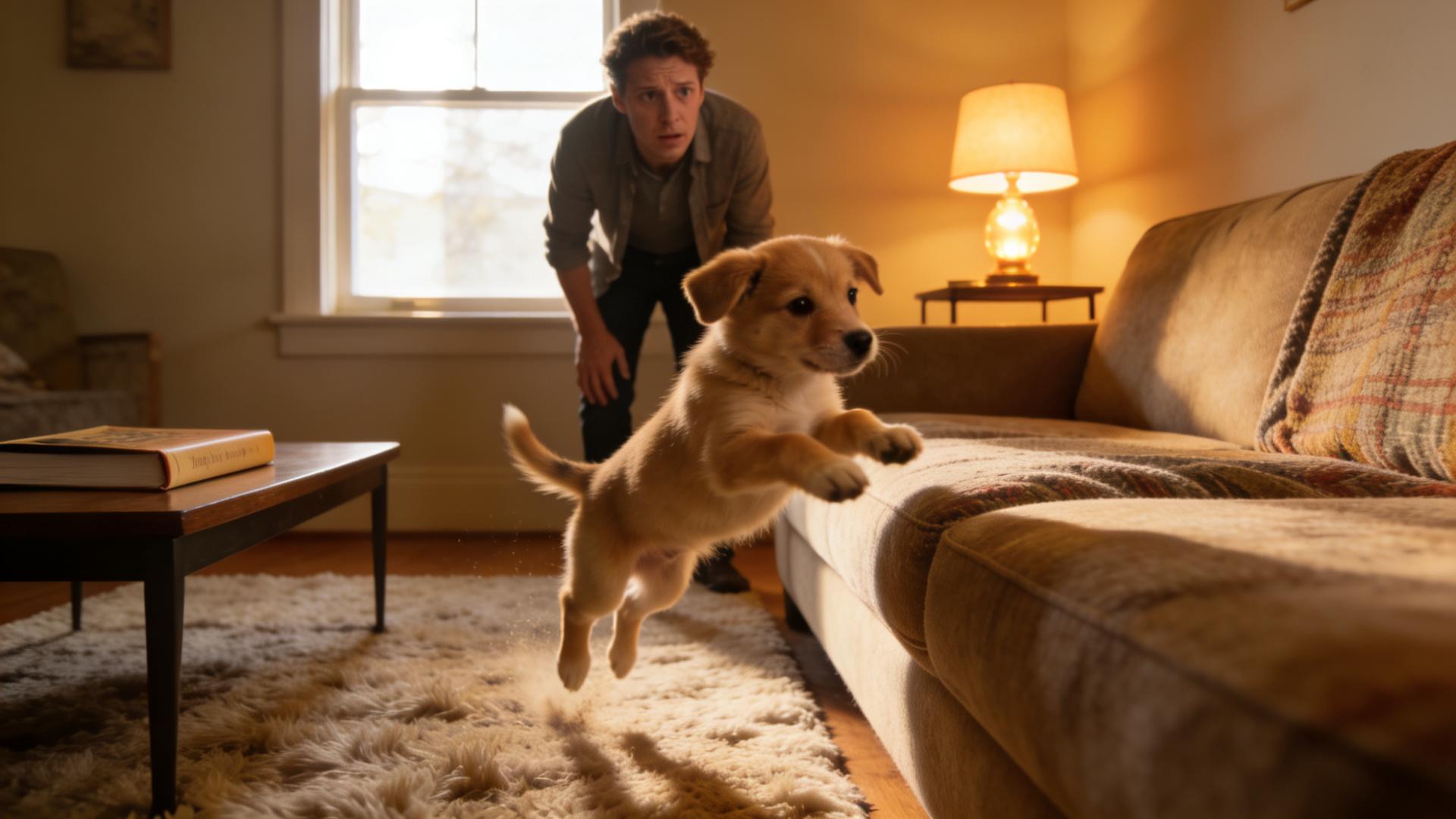
As a loving puppy parent, you watch every wobbly step and joyful bounce with a mix of adoration and quiet concern. That leap off the couch makes your heart skip a beat. You wonder: is this safe for their growing joints? What if they miss and tumble? This instinct to protect is the first sign of a great owner. Today, we’re turning that concern into proactive, health-building action. Beyond just getting on the bed, structured step and ramp training is a foundational skill that cultivates body awareness, prevents injury, and sets the stage for a lifetime of confident movement. This article will guide you through why it's critical, how to choose the right tools, and provide a step-by-step protocol to develop your puppy's limb coordination and proprioception safely and effectively.
🐕 The Why: Benefits Beyond the Couch
It’s easy to see a ramp or step as merely a convenience tool, but its true value lies in developmental training. This practice is a deliberate exercise for your puppy’s body and mind.
Building the Mind-Body Connection: Proprioception
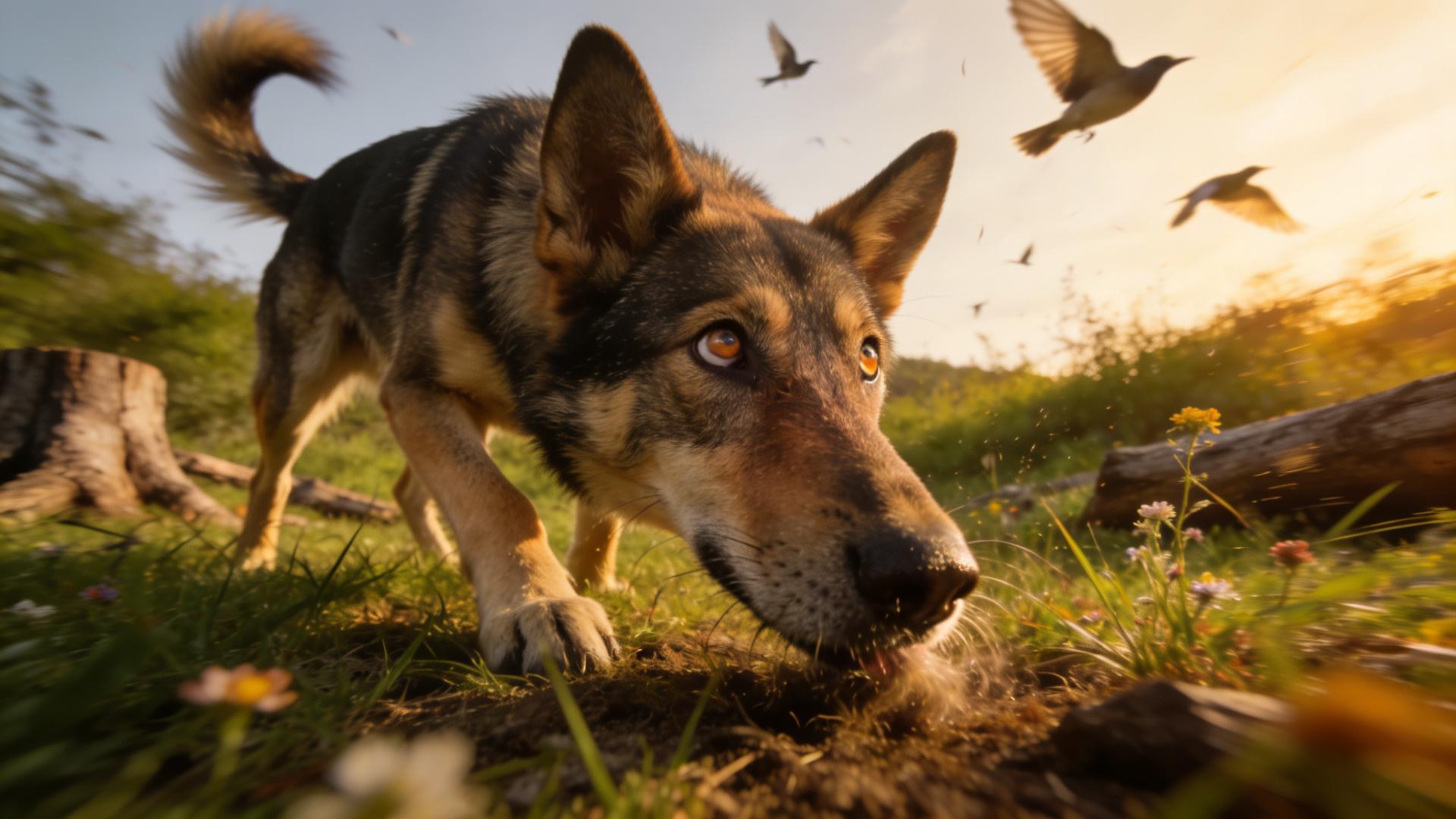
Proprioception is your dog’s internal GPS. It’s the unconscious awareness of where their body and limbs are in space. A puppy with good proprioception knows how high to lift a paw to clear a step, how to shift weight to maintain balance on a slope, and how to land softly. Ramp and step training is a masterclass in proprioceptive development, requiring focused calculation with every movement.
Strengthening the Support System
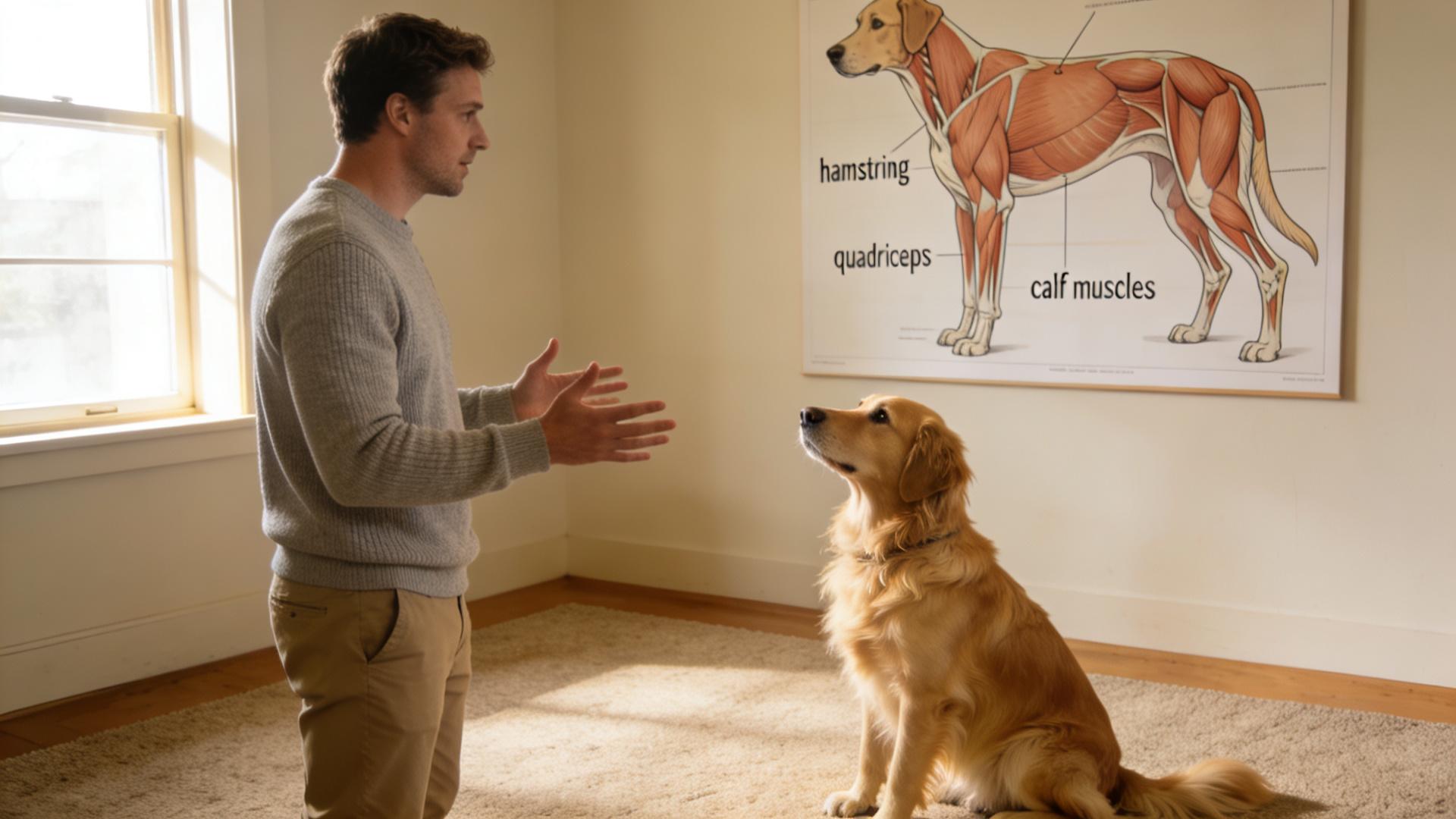
This training doesn’t just build the large, showy muscles; it targets the deep stabilizing muscles around the shoulders, hips, and core. Controlled climbing strengthens these supports, leading to:
- Improved Balance: Navigating a slight incline requires micro-adjustments in weight distribution.
- Enhanced Limb Coordination: Precise, alternating paw placement is the cornerstone of graceful, efficient movement.
- Joint Safety: Strong stabilizers act as shock absorbers, protecting vulnerable growth plates and joints.
The Stark Alternative: The Dangers of Jumping
Contrast this with the uncontrolled, high-impact stress of jumping down from furniture. For a growing puppy, this can exert dangerous force—up to 6 times their body weight—on immature joints. The repetitive shock can contribute to micro-trauma, a precursor to conditions like arthritis or even acute injuries like fractures or ligament tears (like the cranial cruciate ligament). Training with steps and ramps isn’t coddling; it’s responsible, preventative healthcare. For more on protecting those precious joints, explore our guide on joint health supplements for growing dogs.
🔧 The Tools: Choosing the Right Equipment
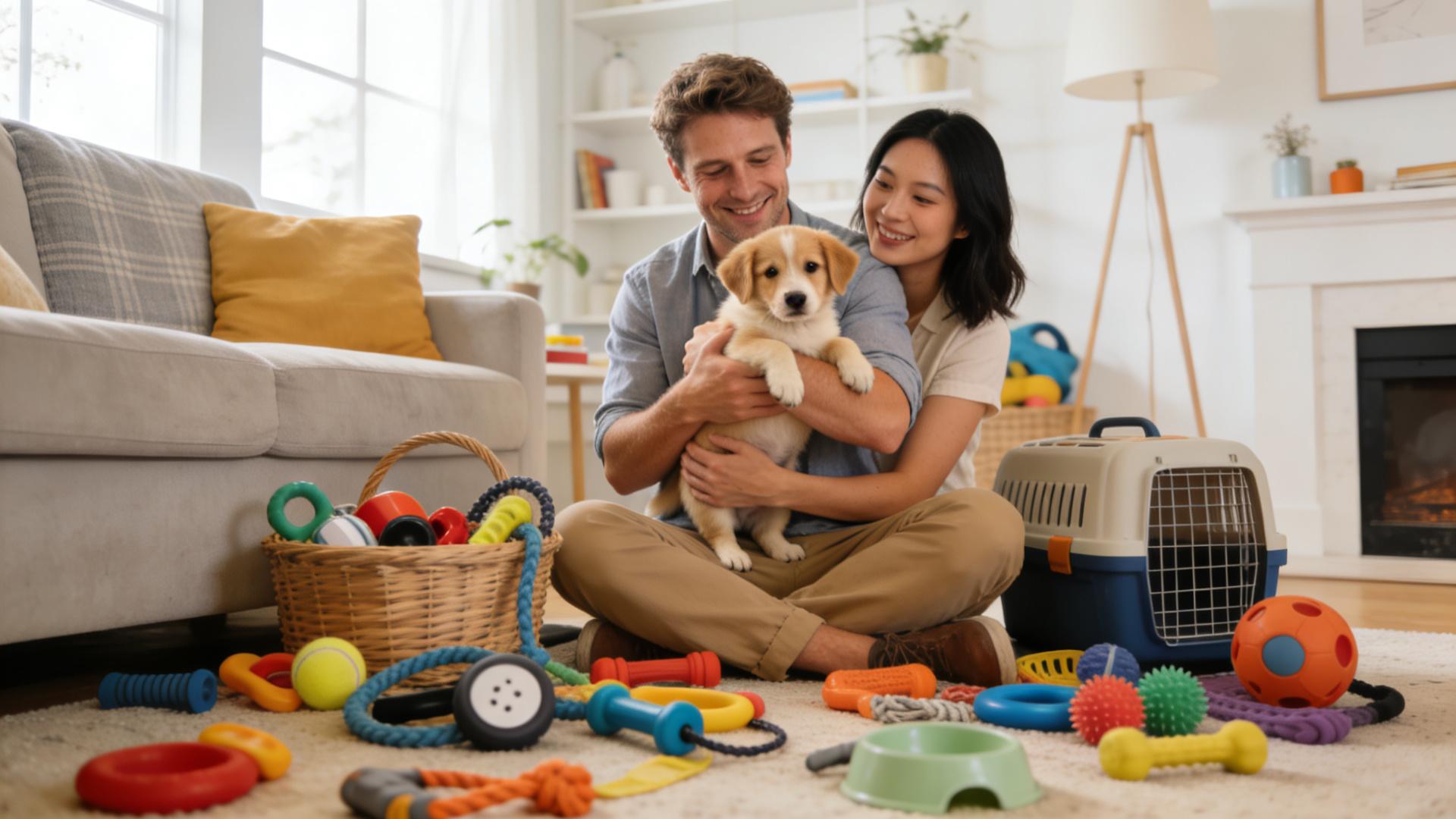
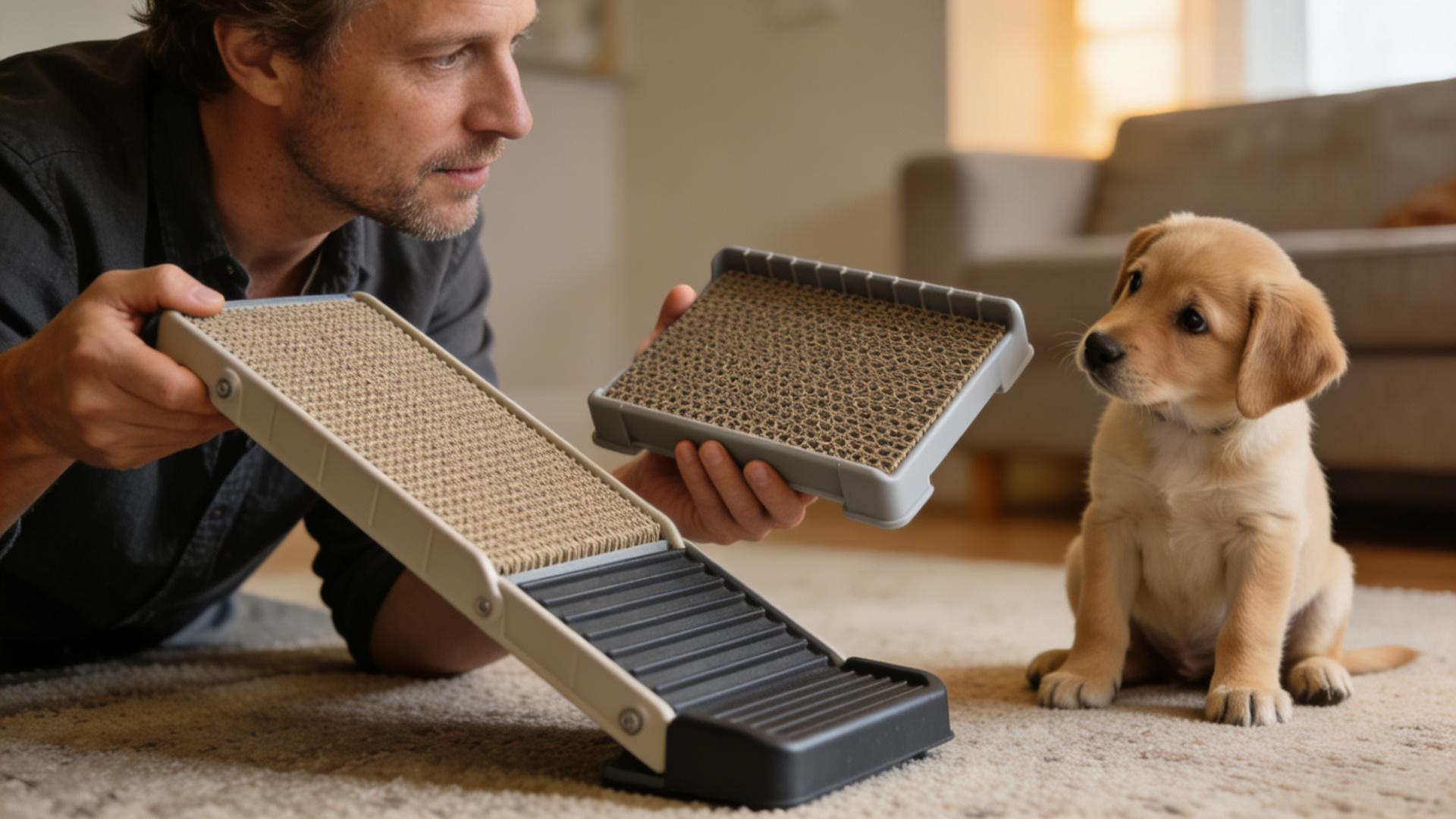
Not all ramps and steps are created equal. Selecting puppy-appropriate equipment is your first step toward success and safety.
Ramps vs. Steps: Choosing Your Path
- Ramps: Ideal for lower, longer inclines (e.g., getting in/out of a vehicle, onto a low bed). They promote a smooth, continuous gait and are excellent for initial confidence-building, especially for small or hesitant breeds.
- Steps: Best for training precise paw placement and developing greater joint flexion and extension. They are often more space-efficient for accessing higher furniture like sofas.
Critical Selection Factors
When shopping, put your puppy’s health and safety first by evaluating these features:
- Slope & Height: For ramps, a gentle incline (no more than 18-25 degrees) is essential. Steeper ramps can be intimidating and cause slipping. For steps, the rise between steps should be minimal for a puppy.
- Surface Traction: This is non-negotiable. Look for a surface with a high-friction, carpet-like material or rubberized grooves. Avoid any slippery plastic or metal surfaces.
- Width & Stability: The equipment must be wider than your puppy and have a solid, non-skid base. It should not wobble, tip, or slide when in use.
- Weight Capacity: Always choose a product rated for your puppy’s projected adult weight. A Great Dane puppy will quickly outgrow a step meant for a Chihuahua.
- Side Rails: Gentle, raised sides can provide a psychological feeling of security for nervous pups, preventing them from feeling like they might fall off the edge.
📚 The How: A Step-by-Step Training Protocol
Patience and positivity are your most important tools. Never force or rush your puppy. Follow this gradual protocol, progressing only when your pup is completely comfortable.
Phase One: Introduction & Positive Association
Goal: Make the ramp/steps the best thing ever!
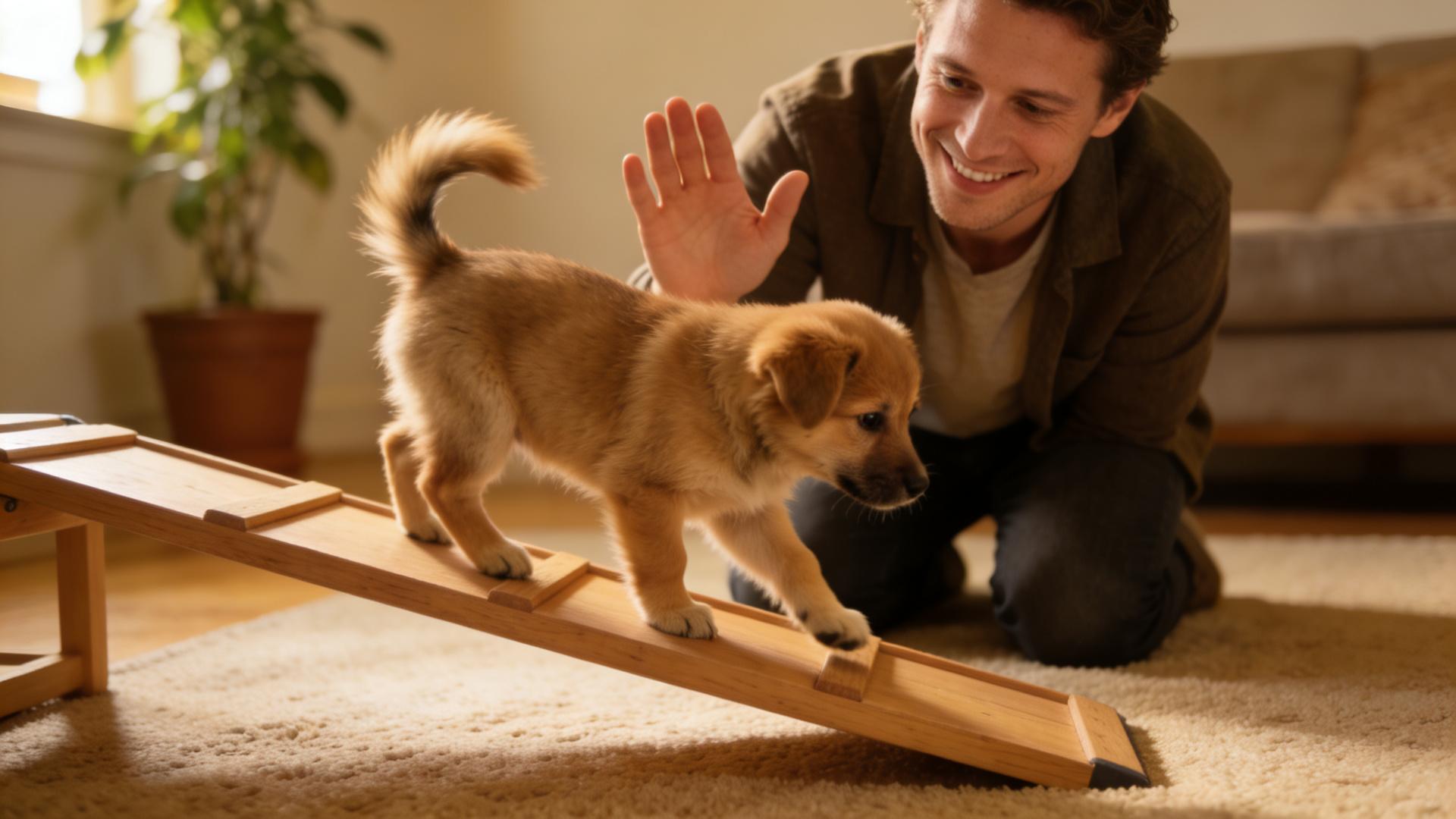
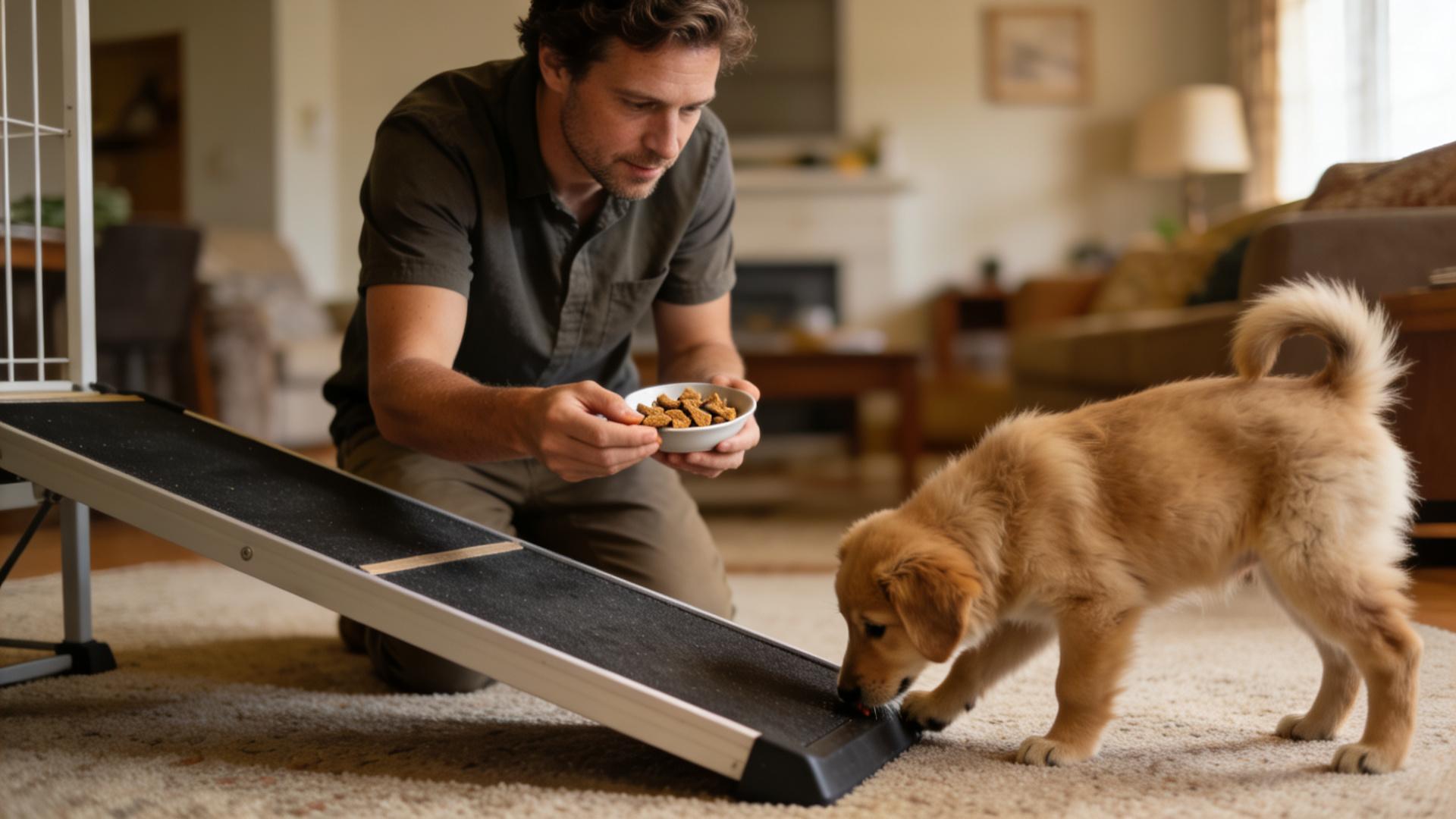
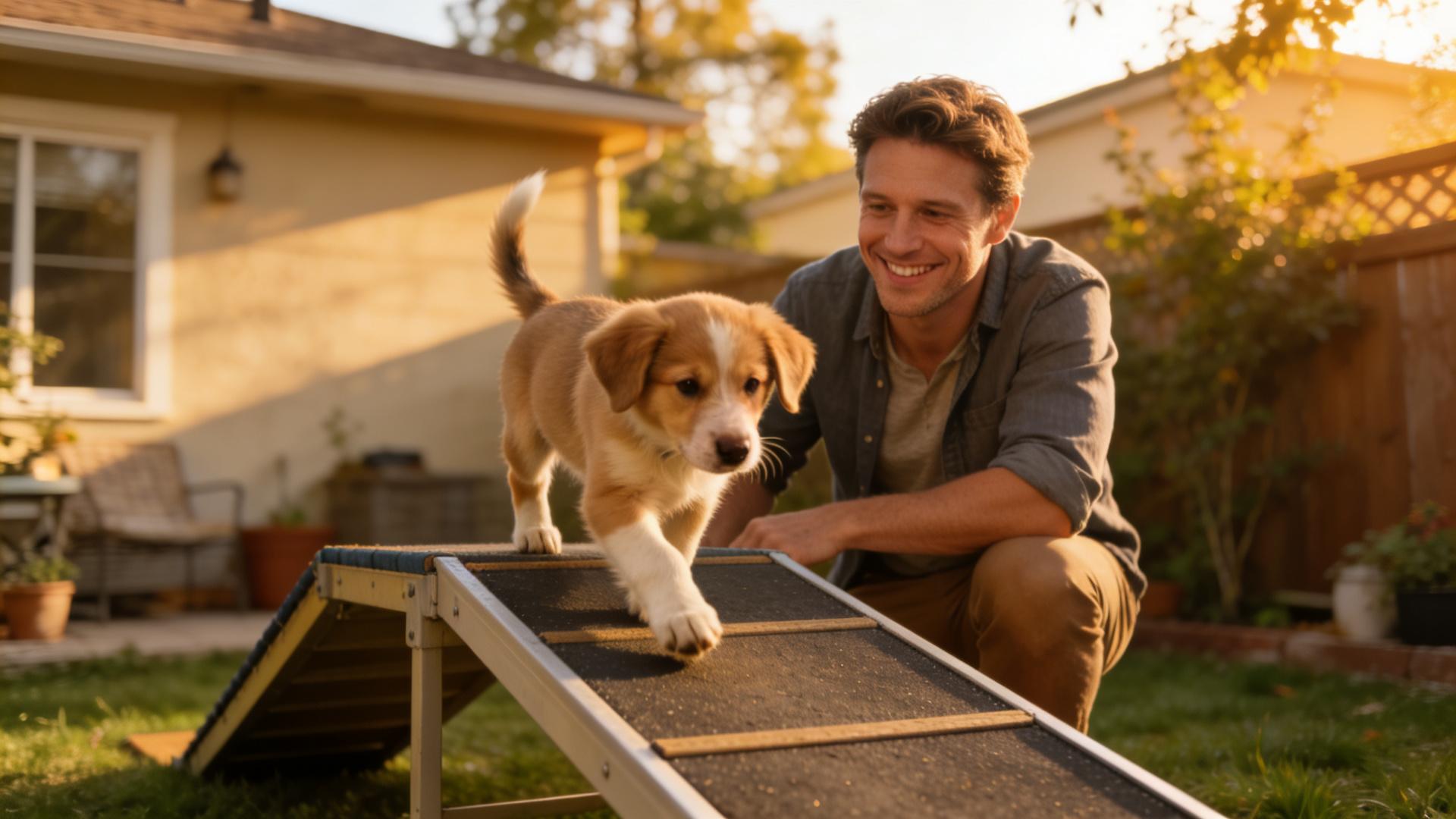
Place the equipment on a flat, familiar surface. Lure your puppy near it with high-value treats. Reward for any interaction—sniffing, a single paw touch. Keep sessions short (2-3 minutes) and super happy!
Phase Two: Leash Guidance & Partial Climbs
Goal: Build understanding of the path.
For ramps: Use a treat to lure your puppy onto the lower section. Reward for staying put. Gradually lure a few steps up, then back down. For steps: Reward for placing front paws on the first step, then all four paws. Use a lightweight leash for gentle guidance if needed, never for pulling.
Phase Three: Building Independence & Full Climbs
Goal: Achieve a full ascent and descent with confidence.
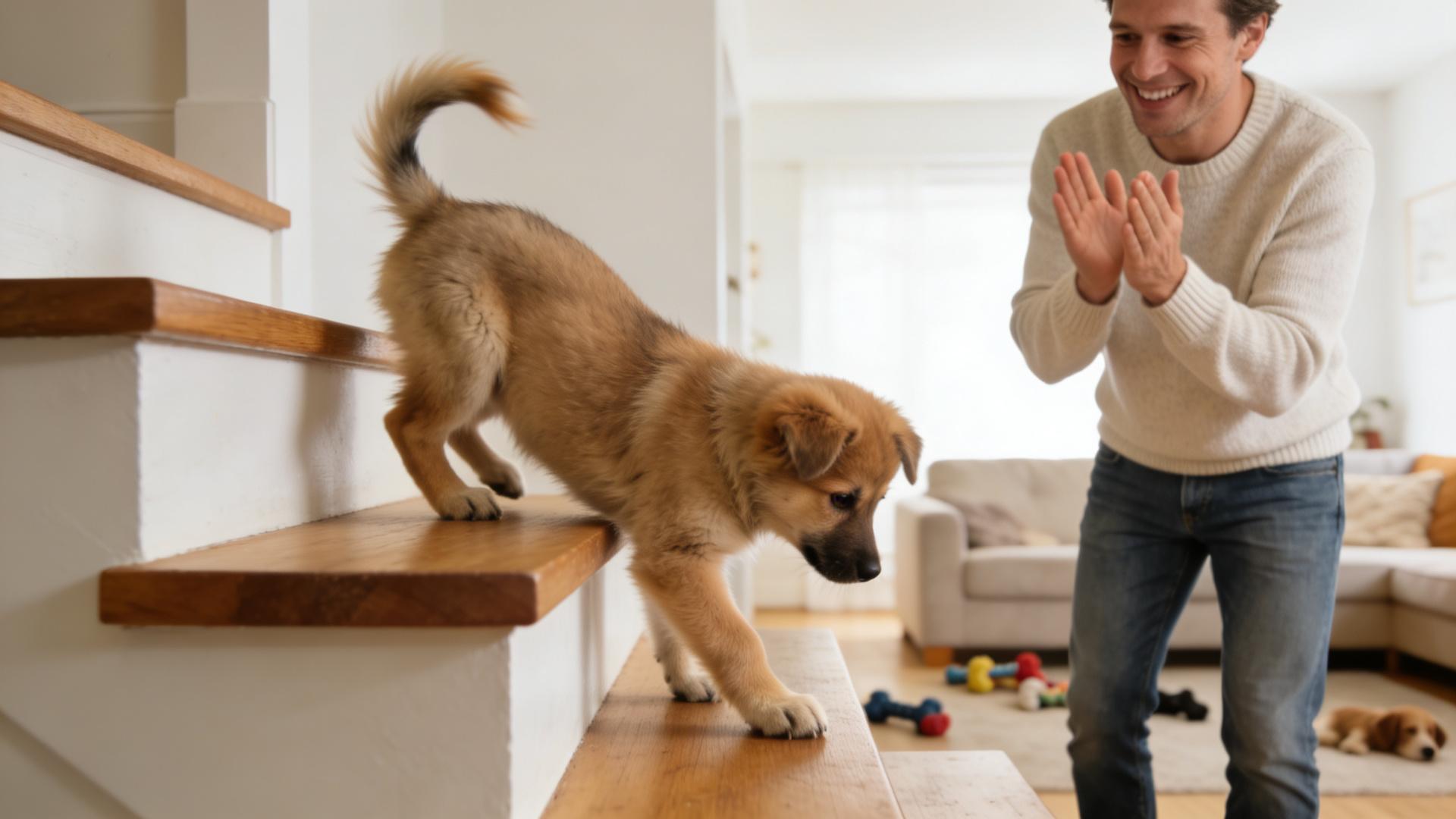
Begin to phase out constant luring. Place a treat at the top of the ramp or on the highest step. Use an encouraging, excited voice. Let your puppy problem-solve and make the climb. Be ready to celebrate lavishly! Practice the descent just as carefully, as controlling their weight going down is crucial for joint health.
Phase Four: Adding Cues & Generalizing the Skill
Goal: Integrate the behavior into daily life.
Once the action is fluent, add a verbal cue like “Ramp” or “Upstairs” just as they begin to climb. Practice from both directions. Slowly move the equipment to its final location (e.g., beside the bed) and practice there. Consistency is key! This foundational training complements other early-life skills; consider pairing it with structured puppy socialization exercises for well-rounded development.
⚠️ Safety and Common Mistakes to Avoid
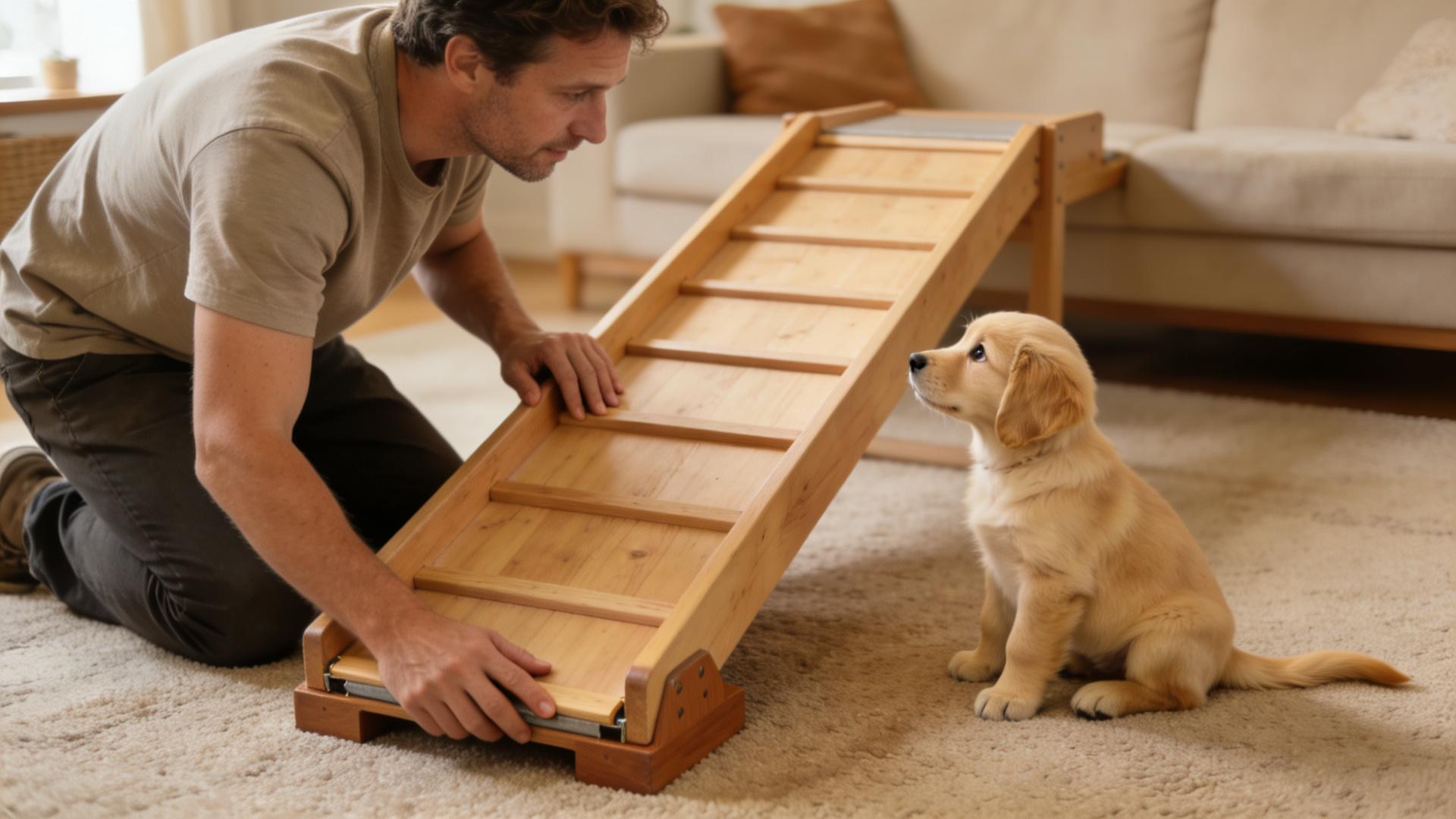
Special Reminder: Supervision is mandatory. Never assume your puppy knows how to use the equipment safely until they are fully proficient.
Essential Safety Rules
- Always Supervise: Be present for every training session and initial independent uses.
- Secure the Equipment: Double-check that the ramp or steps are on a non-slip surface and cannot move during use.
- Start Low, Go Slow: Begin with the smallest possible height. Master that before increasing the challenge.
- Keep Nails Trimmed: Long nails can catch on surfaces and cause a slip or fall.
Common Training Errors
- Moving Too Fast: Pushing a puppy to complete a full climb before they’re ready creates fear and resistance.
- Using the Wrong Height: Starting with a tall bed or high car trunk is overwhelming. Find a lower starting point.
- Neglecting the Descent: Dogs often need more guidance going down. Don’t focus only on the “up.”
- Getting Frustrated: Your puppy senses your energy. If you’re frustrated, end the session on a simple, positive note.
💪 Conclusion: An Investment in a Confident, Agile Future
Step and ramp training is far more than teaching a cute trick. It is a strategic investment in your dog’s long-term physical and mental health. The limb coordination, proprioception, and confidence developed through these careful exercises create a more agile, injury-resistant, and adaptable adult dog. You are not just preventing a bad jump today; you are building a framework for resilient movement for years to come.
Start this rewarding process today. Choose your equipment wisely, embrace the power of patience and positive reinforcement, and watch your puppy grow into a coordinated, confident companion. Your future selves—free from unnecessary vet visits and full of adventurous possibilities—will thank you.