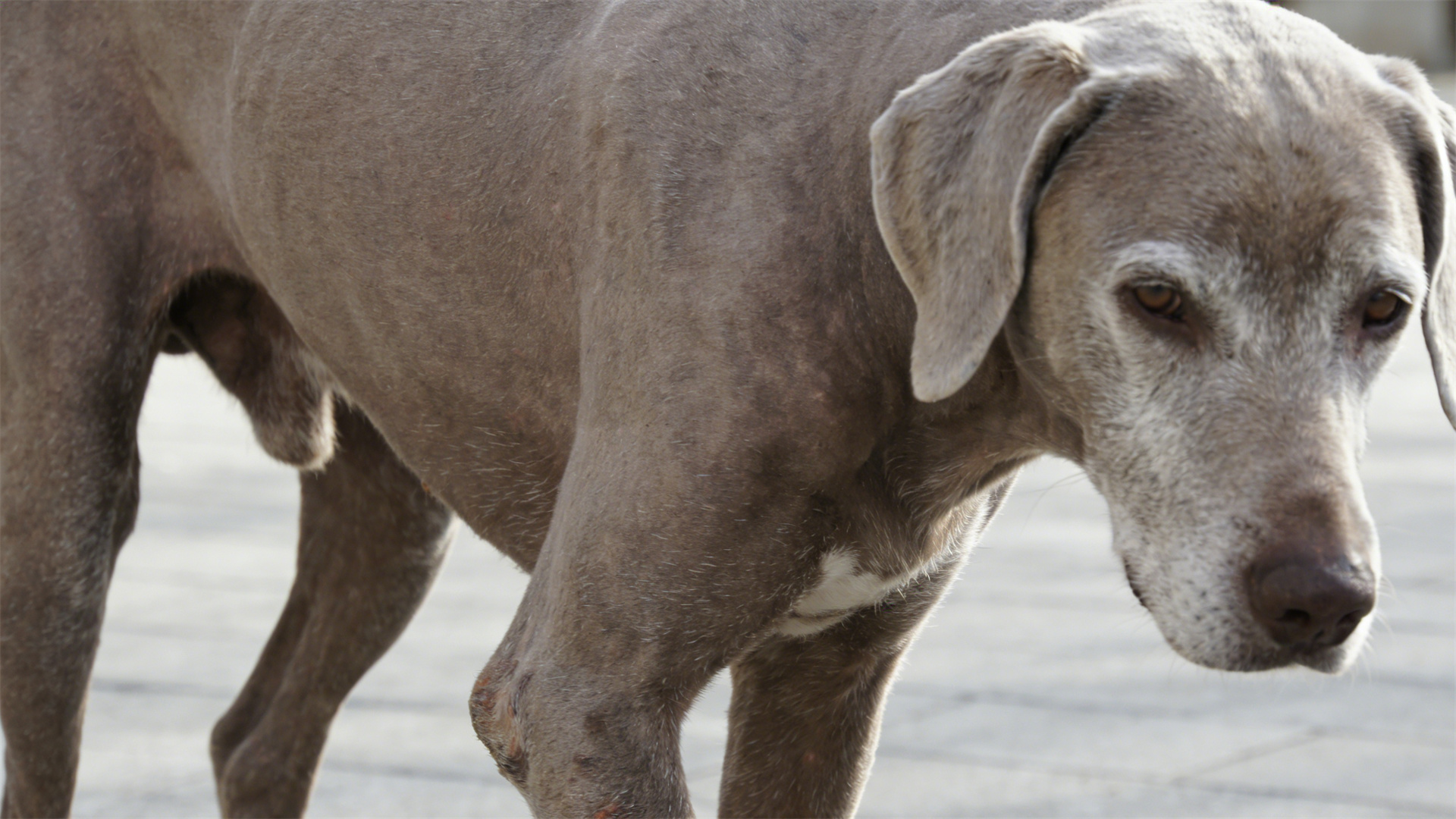
Watching your faithful companion age is a journey filled with deep love and, sometimes, quiet concern. Noticing the first signs of vision decline—a hesitant step in dim light, a slight bump into a chair that’s always been there—can pull at your heartstrings. You want to help, to ensure their golden years are safe and comfortable. The wonderful news is that with some thoughtful, simple adjustments to your home, you can dramatically reduce your senior dog’s anxiety and risk of injury, transforming your shared space into a sanctuary of confidence. This guide will walk you through creating a vision-friendly home, an act of profound love that supports their independence and deepens your bond.
👁️ Understanding Canine Vision Decline: Seeing the World Through Their Eyes
To create a supportive environment, it helps to understand what your dog may be experiencing. Age-related vision loss in dogs is common and can stem from several conditions. Nuclear sclerosis, a hardening of the eye lens causing a harmless bluish haze, and cataracts, an opaque clouding that can impair sight, are frequent culprits. Even without a specific diagnosis, general sensory slowdown can blur their world.
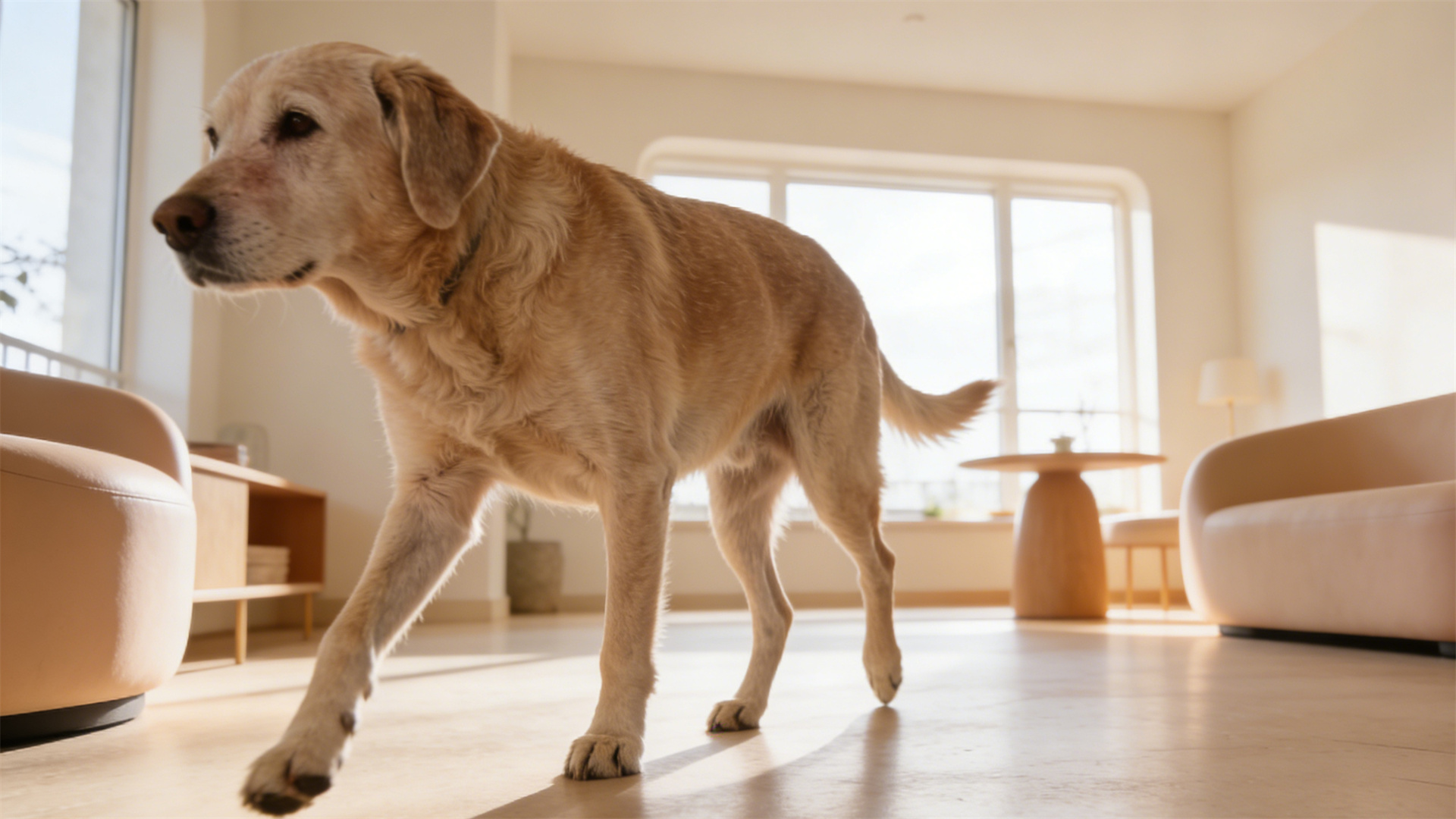
Your dog isn’t seeing pure darkness; they’re likely navigating a world of vague shapes, muted contrasts, and poor depth perception. Low-light situations become especially challenging. Watch for these behavioral signs:
: Hesitation or Stopping: Pausing before entering a room or going outside.
: Bumping and Clumsiness: Gently nudging furniture, door frames, or walls.
: Anxiety in New Places: Appearing disoriented or stressed in unfamiliar environments.
: Changes in Eye Appearance: A cloudy, bluish, or white film over the eyes.
: Reluctance to Jump: Avoiding the sofa or bed they once leapt onto easily.
: Startling Easily: Being surprised by quiet approaches or sudden movements.
🏠 The Foundational Principles of a Vision-Friendly Home
Before we dive into specific rooms, let’s establish three core principles that will guide every change you make.
Principle 1: Consistency is King
Once you find a safe, logical layout, stick to it. Avoid rearranging furniture. Your dog is creating a mental map of their territory, and consistency is their compass. If you must move something, guide them through the new layout patiently.
Principle 2: Security Through Clear Pathways
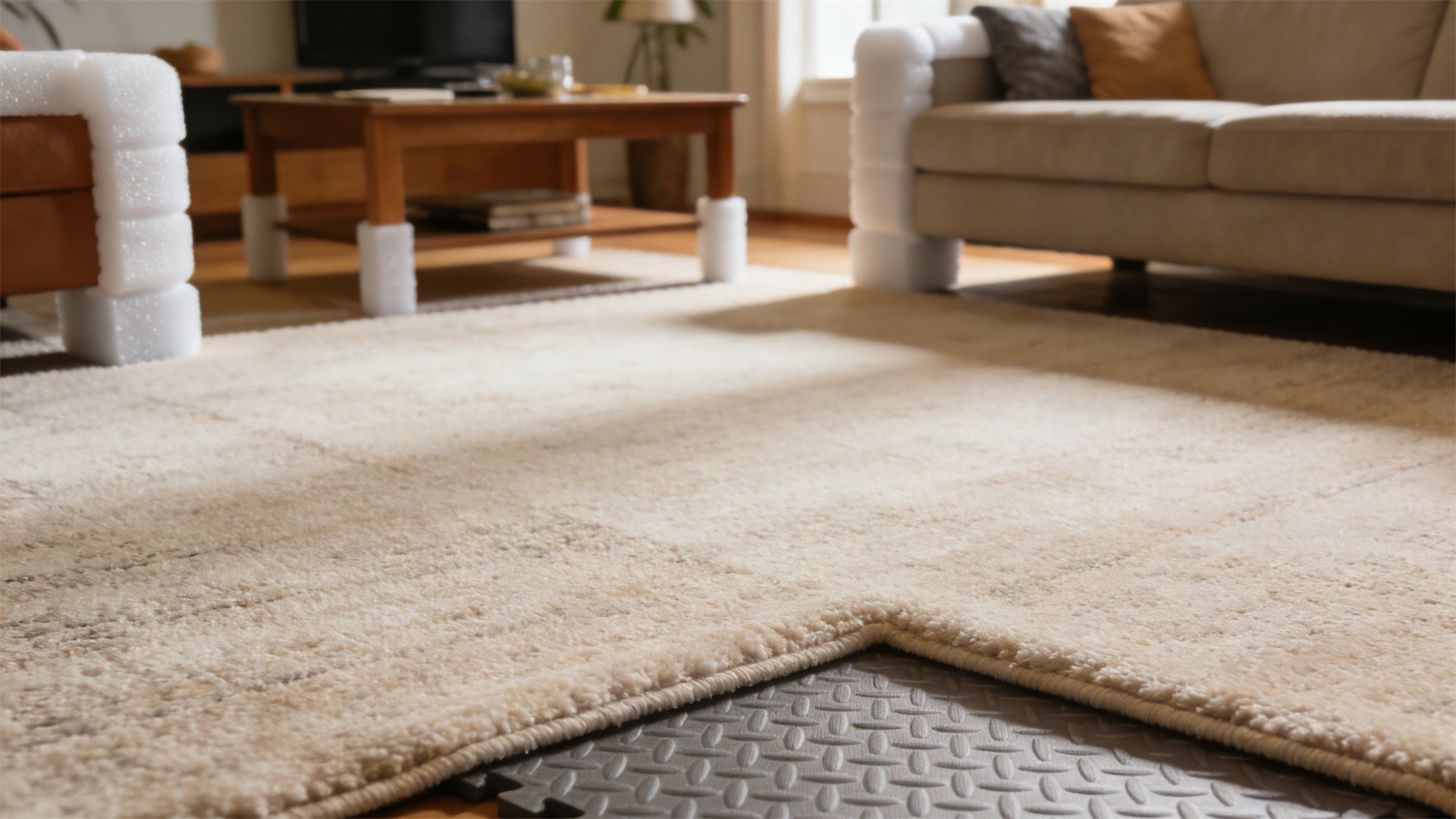
Think like a safety engineer. The goal is to create wide, unobstructed lanes for travel between your dog’s key destinations: bed, water, food, and door to go outside. Preventing slips, trips, and falls is the top priority.
Principle 3: Maximize Contrast and Texture
Since visual clarity is fading, amplify other cues. Use contrast to help define edges—a light-colored bed on a dark floor, a dark mat under white food bowls. Texture provides vital tactile information under their paws, signaling a change in surface or an upcoming landmark.
🛋️ Room-by-Room Adjustment Guide
Living room and common areas: The heart of the home
This high-traffic zone requires careful planning. Start by seCare all area rugs with high-quality non-slip rug pads to prevent dangerous sliding. Use corner grippers or double-sided tape for added security. Cushion sharp furniture edges, like coffee table corners, with foam protectors. Maintain a predictable furniture layout. Consider placing a textured mat (like a coir or rubber mat) in front of the couch they use or their favorite sunny spot. You can even use scent markers—a single, consistent drop of pet-safe essential oil like vanilla on a doorframe—to help them identify different rooms.
Hallways and staircases: High-risk zones
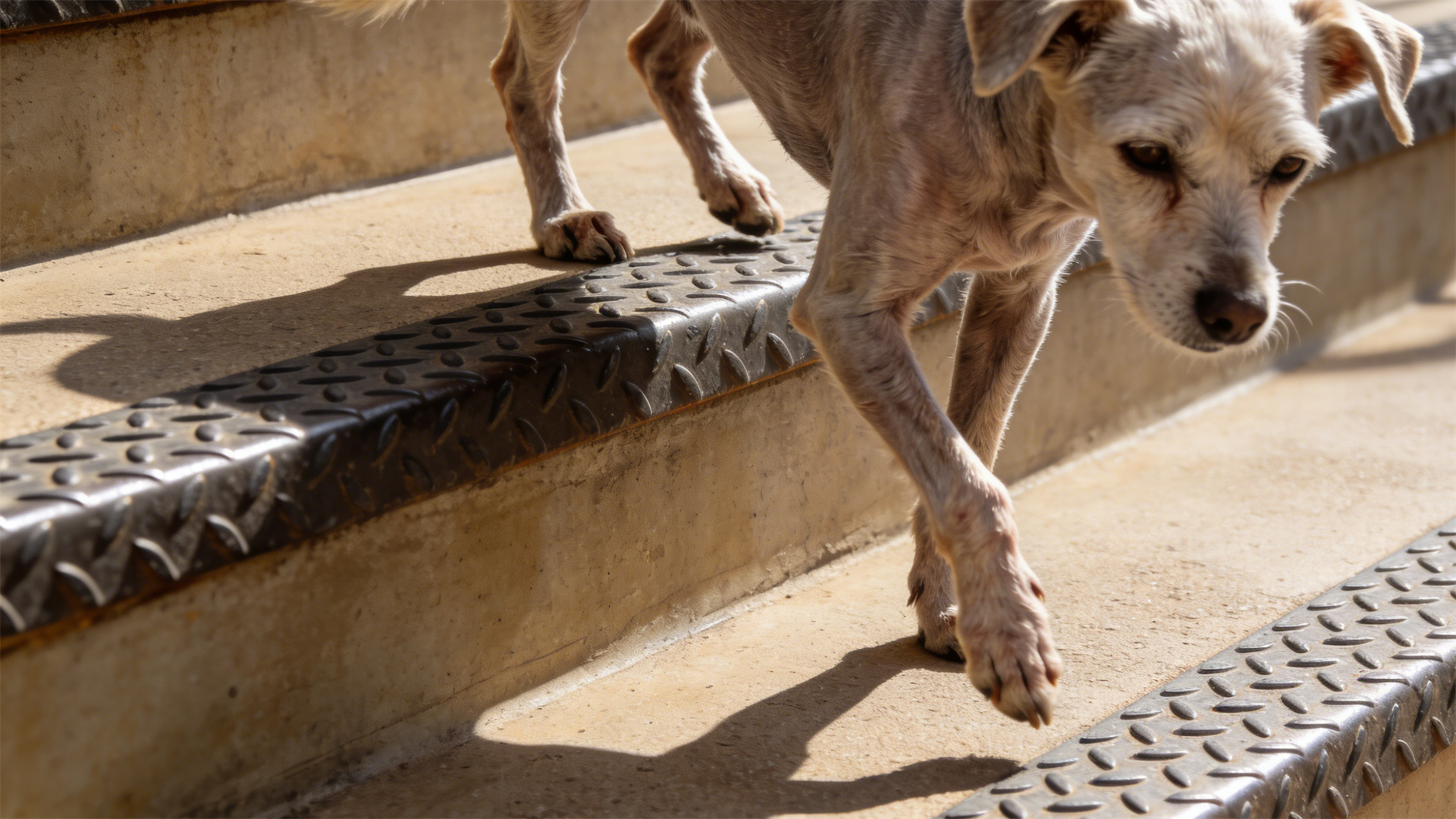
Special Reminder: This area demands the most urgent attention. Safety gates are non-negotiable for blocking access to stair tops and bottoms, especially for dogs with severe impairment. For stairs they are permitted to use, enhance each step. Apply high-contrast, non-slip treads—black treads on light wood, for example—to define the edge of each step clearly. Ensure hallway runners are firmly secured. Good, consistent lighting in these passageways is critical at all hours.
Bedroom and sleeping area: A safe haven
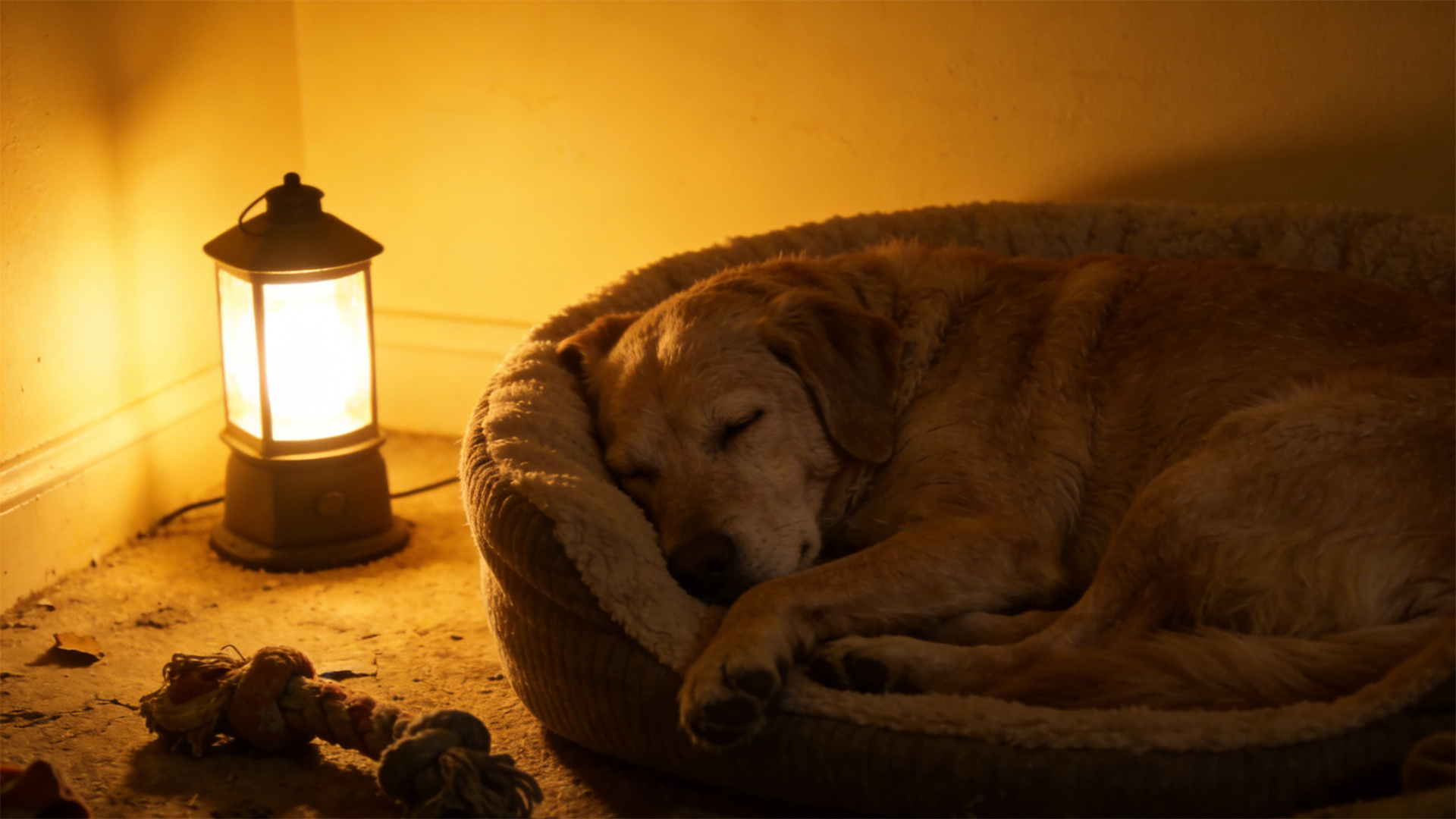
Your dog’s bed should be a fortress of comfort and predictability. Invest in a supportive orthopedic bed with a distinct texture (like faux sheepskin or a nubby weave) that feels different from your floor. Place it in a permanent, draft-free corner. Most importantly, ensure there is a clear and direct path to this bed from the doorway. Avoid placing it where they have to navigate around furniture to reach it.
Kitchen and feeding station: Fueling without fear
Keep food and water bowls in a fixed, unchanging location. Place them on a large, non-slip mat with a contrasting color to the floor; this defines the “kitchen” area for them. Be militant about keeping floors clear of debris, chair legs, and other obstacles. Get into the habit of keeping all cabinet doors and dishwasher doors fully closed to prevent head bumps.
✨ Enhancing Navigation and Overall Comfort
Beyond furnishings, small daily practices make a huge difference. Use plug-in night lights or leave curtains partially open to provide consistent, low-level ambient light, preventing total darkness. Rely more on verbal cues like “step up,” “step down,” “left,” “right,” and “wait.” Your voice becomes their guiding beacon. For added support during walks or in very unfamiliar settings, consider a supportive harness with a handle or a mobility aid like a Halo vest that gently buffers obstacles.
Conclusion: A Labor of Love That Deepens Your Bond
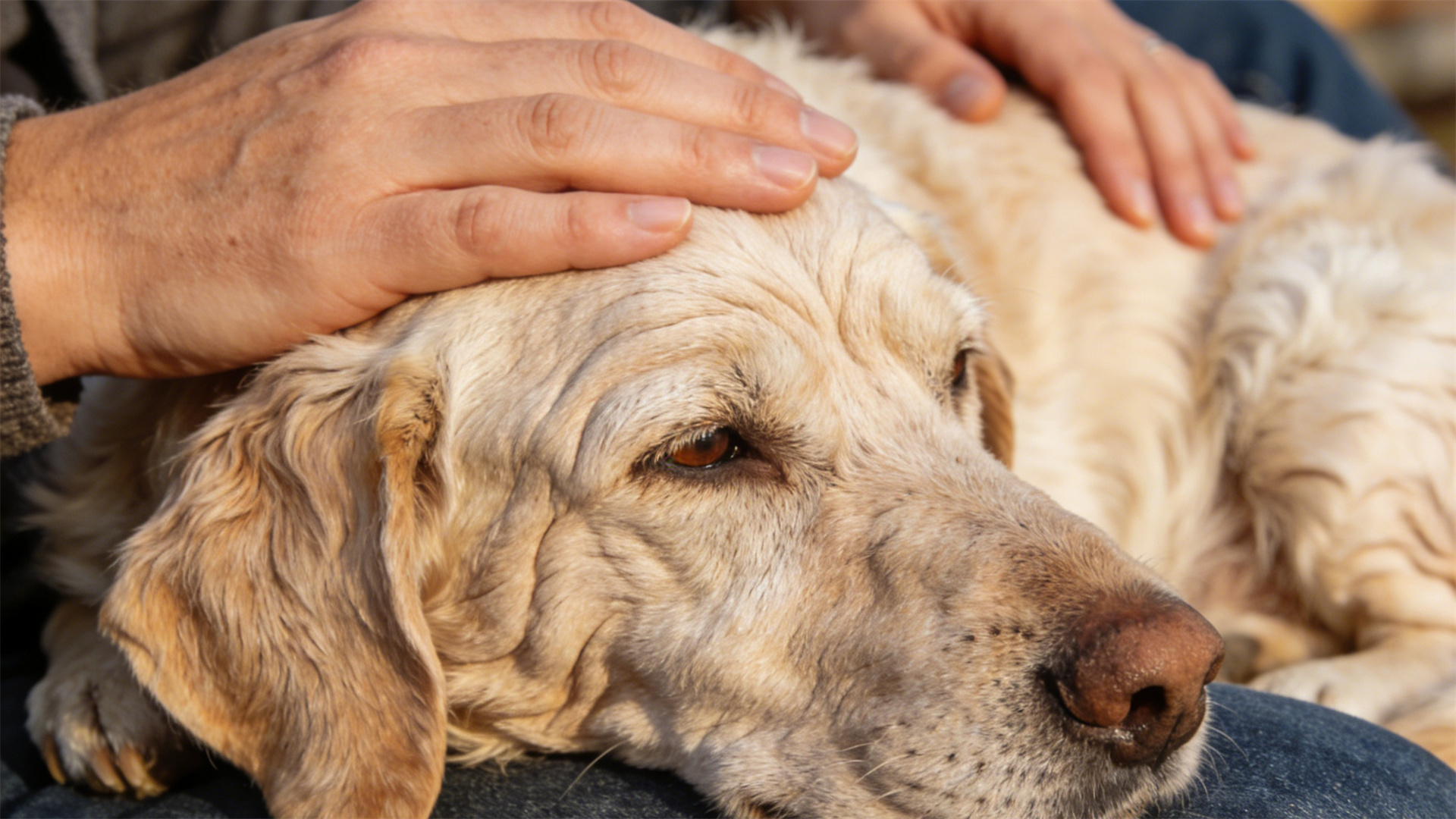
Adjusting your home for your senior dog’s declining vision is one of the most tangible expressions of care you can offer. These modifications are not about limitation, but about liberation—freeing your dog from fear and uncertainty. Be patient, observe their behavior, and celebrate small victories. As they adapt with your loving guidance, you’ll witness their confidence return. This journey, while born of challenge, offers a unique opportunity to deepen the incredible bond you share, proving that even as senses change, love and security speak the clearest language of all.