📸 Case #1: The Dish Brush Decapitator
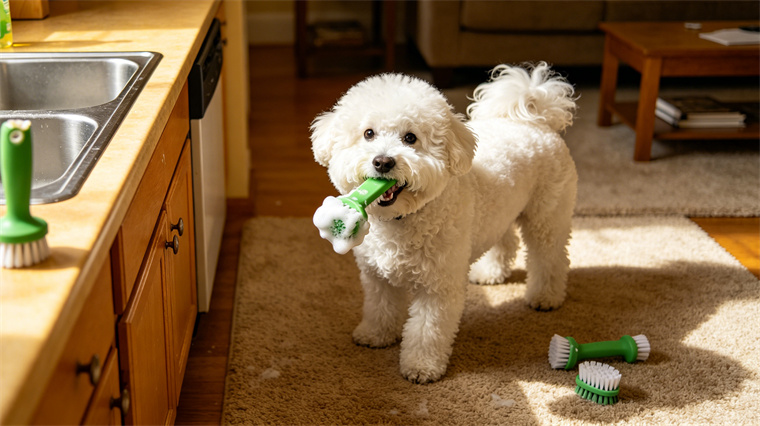
[Image Description] By the kitchen sink, the green handle of a dish brush stands all alone; its brush head has vanished into thin air. Meanwhile, across the living room carpet, a Bichon Frise proudly parades that very green brush head in its mouth—still dripping with dish soap suds. The dog’s eyes sparkle with delight; it appears thoroughly pleased with its “trophy.” Scattered nearby were two other old brush heads—it seems we have a "repeat offender" on our hands. The owner captioned the photo: "She stole the dish brush head; now, every time I need to wash the dishes, I have to search the entire house just to find it."
【Behavioral Analysis】 The shape and resilience of the brush head likely mimic the type of chew toys that dogs enjoy. Providing a suitable rubber chew toy can serve as a safe alternative.
📸
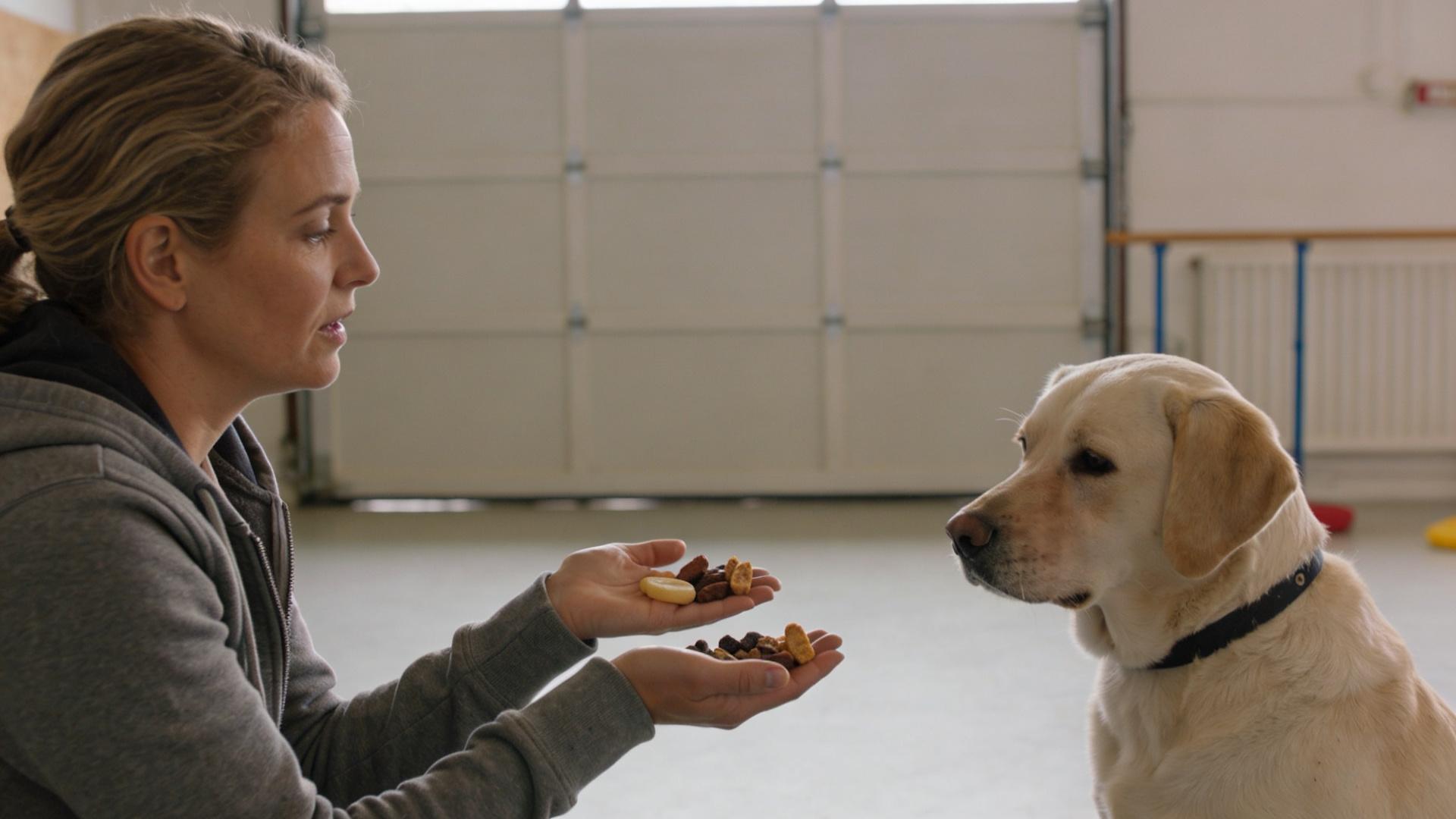
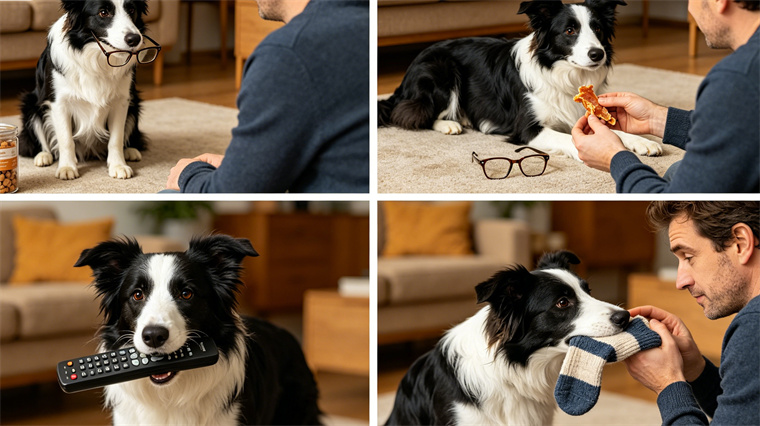
Case #2: The "Trader" Who Swaps Stolen Goods for Treats[Image Description] A four-panel photo series: Panel 1—The dog (a clever Border Collie) holds her owner's glasses in her mouth, crouching before them with a treat jar nearby; Panel 2—The owner hands her a piece of dried chicken, and the dog drops the glasses; Panel 3—The dog returns, this time carrying a TV remote control; Panel 4—The dog holds a sock in her mouth, but when the owner pretends not to notice her, she nudges the owner's hand with her nose. Caption: "I taught her how to fetch things, but now she's turned into a thief. She'll grab just about anything to trade with me for treats. She's even learned how to bargain—if I refuse to make a trade, she goes off to grab something even more valuable."
[Behavioral Analysis] This case perfectly illustrates a side effect of "operant conditioning." The owner originally taught the command "fetch," but the dog independently invented a "steal-and-trade" feedback loop. To resolve this, the cycle must be broken: rewards should be given *only* for fetching specific, designated items, while any stolen items should be met with complete indifference.